Best High Tunnel for an NRCS Grant: Grower, Plus, or Pro?
Updated October 2026
Choosing the best high tunnel for an NRCS grant starts once you know you qualify for the program. From there it's a practical decision about your site. This guide covers what NRCS asks of every eligible kit, what our Grower, Plus, and Pro tiers share, what each one adds, and how to match a tier to your climate and the way you work.
Key Takeaways
- The frame is the same on every tier. Grower, Plus, and Pro all use 1.9" 13-gauge galvanized steel main bows with 16-gauge trusses on every bow.
- The double-layer top starts at the Plus. So do twin-wall polycarbonate end walls, peak vents, and double doors on each end, though, like every option here, none is locked to one tier.
- The Pro's woven roll-up sides are a separate material. That keeps the job smaller when the top plastic is due to be replaced.
- CPS 325 is due for review. NRCS expects its next review of the standard to begin in October 2026, so confirm the current requirements with your agent before you order.
Is there an NRCS-approved high tunnel?
The short answer
Not in the way the label suggests. NRCS funds a conservation practice, the High Tunnel System under Conservation Practice Standard 325, rather than approving brands. The best high tunnel for an NRCS grant is a kit designed to meet your state's version of that standard that also suits your climate and the way you farm.
You'll see "NRCS-approved" on plenty of kit listings. The accurate term is NRCS-eligible: the kit is designed to meet CPS 325, and your agent confirms the details against your state's requirements. NRCS funds the practice through its EQIP High Tunnel Initiative, part of the Environmental Quality Incentives Program.
What CPS 325 asks of every eligible kit
The national standard sets a floor that every eligible kit has to clear. Under Conservation Practice Standard 325, a high tunnel generally needs to:
- Stand at least 6 feet tall at the peak.
- Come from a manufactured kit, with a frame of metal, wood, or durable plastic.
- Carry a greenhouse-grade, UV-resistant cover of at least 6 mil with a 4-year minimum lifespan.
- Grow crops in the ground or in raised beds no deeper than 12 inches, not on tables or benches.
Every CT Greenhouse tier is designed to meet that standard. States write their own version of it, so details can differ where you farm, and our CPS 325 checklist goes through it requirement by requirement. The standard also suggests considering a double layer of plastic, which is worth keeping in mind as you compare tiers.
What every CT Greenhouse tier shares
All three tiers are made from the same frame: 1.9" 13-gauge galvanized steel main bows, 1.315" 16-gauge side and ridge purlins, and 16-gauge galvanized trusses on every bow, bolted with Grade 5 hardware. The tubing is American-made. Every tier comes in widths from 14 to 34 feet, in any length in multiples of 4 feet, with roll-up sides and corner wind braces.
All three are gothic-profile structures. UConn Extension's guidance on engineering high tunnels is that tunnels in northern states should have a gothic shape to shed snow. Engineering documentation is available on request.

Grower, Plus, or Pro: what each tier adds
Since the frame stays the same, each tier adds to the cover, the end walls, the doors, and the venting. Think of it like a building set: you can take any option from any tier and combine it into a custom kit. More than 90% of the NRCS high tunnels we build are customized to the farm they're going to.
Grower: the entry tier
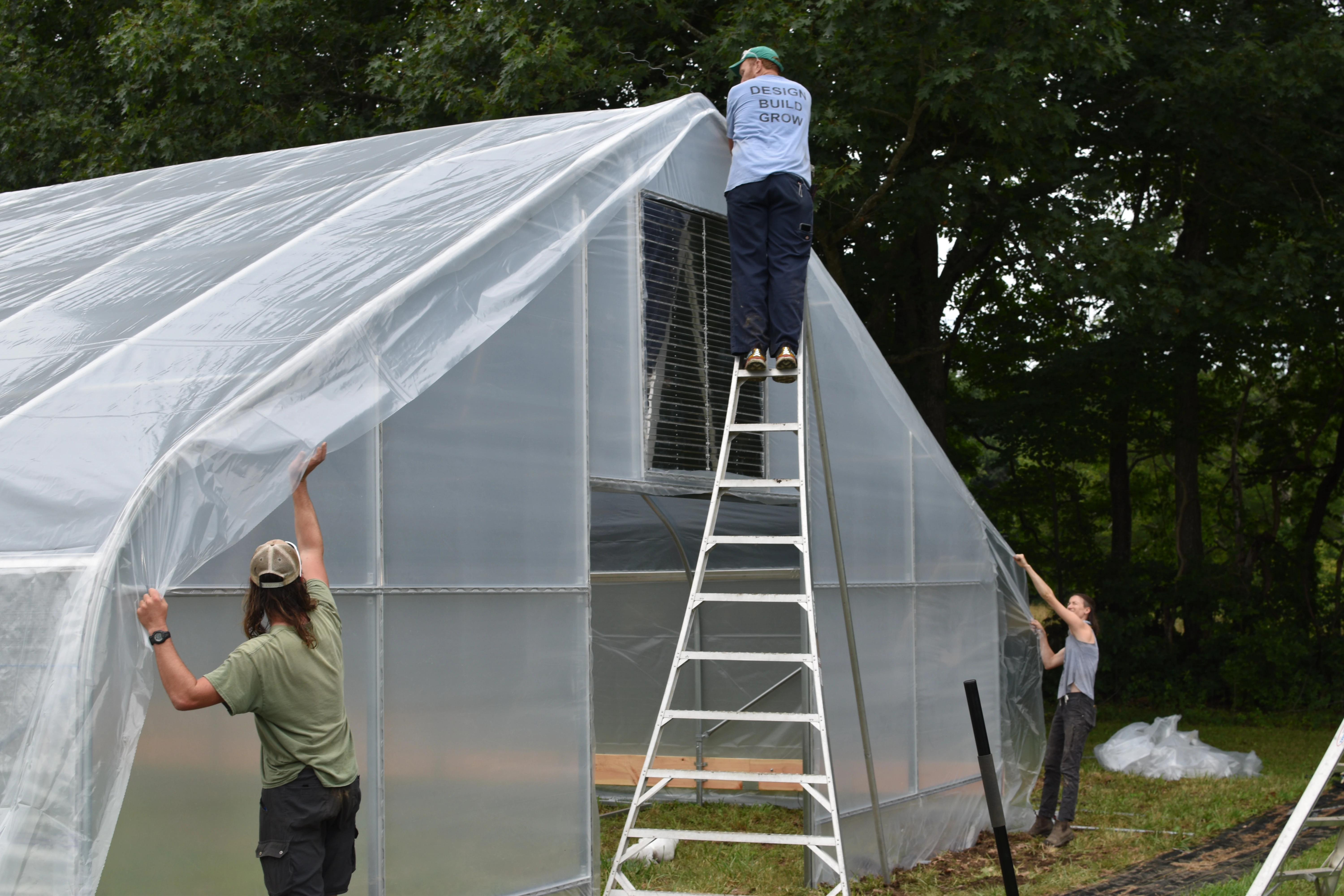
The Grower pairs the frame with a single-layer greenhouse plastic top, roll-up sides, and steel-framed end walls covered in 6-mil poly film. Doors aren't included, so you can build your own or add them. It's a complete NRCS-eligible structure for growers who want to start with the essentials.
Plus: double layer, polycarbonate ends, and doors
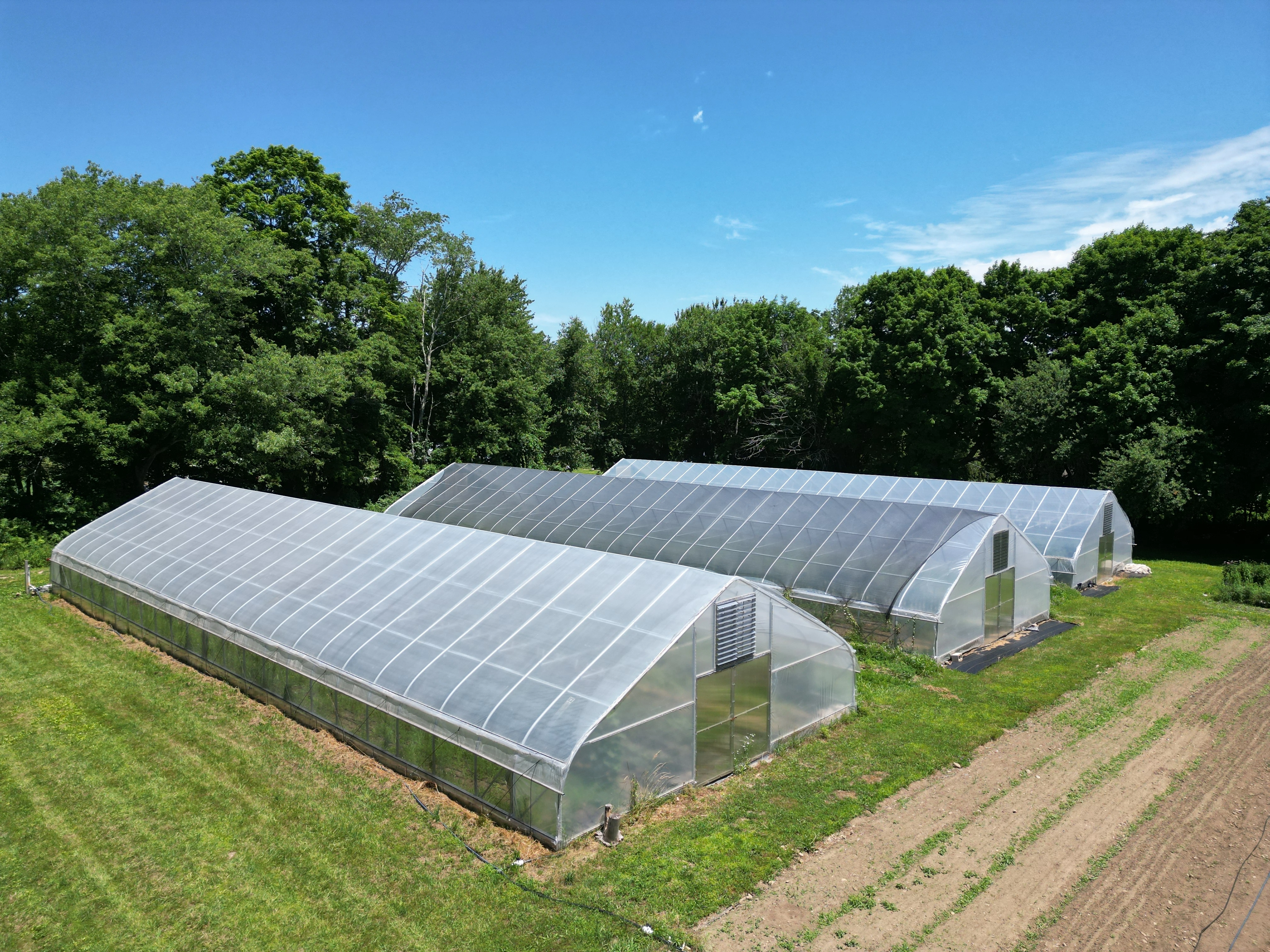
The Plus keeps everything in the Grower and adds an inflated double layer of 6-mil plastic with an inflation blower, twin-wall polycarbonate end walls, and 8' x 7' double hinged doors on each end (two 4' doors). It also adds end-wall peak vents with an automatic wax-cylinder opener, which works without electricity, and bug exclusion netting under the roll-up sides. Powered, thermostat-controlled openers are also available.
Pro: the fully upgraded build
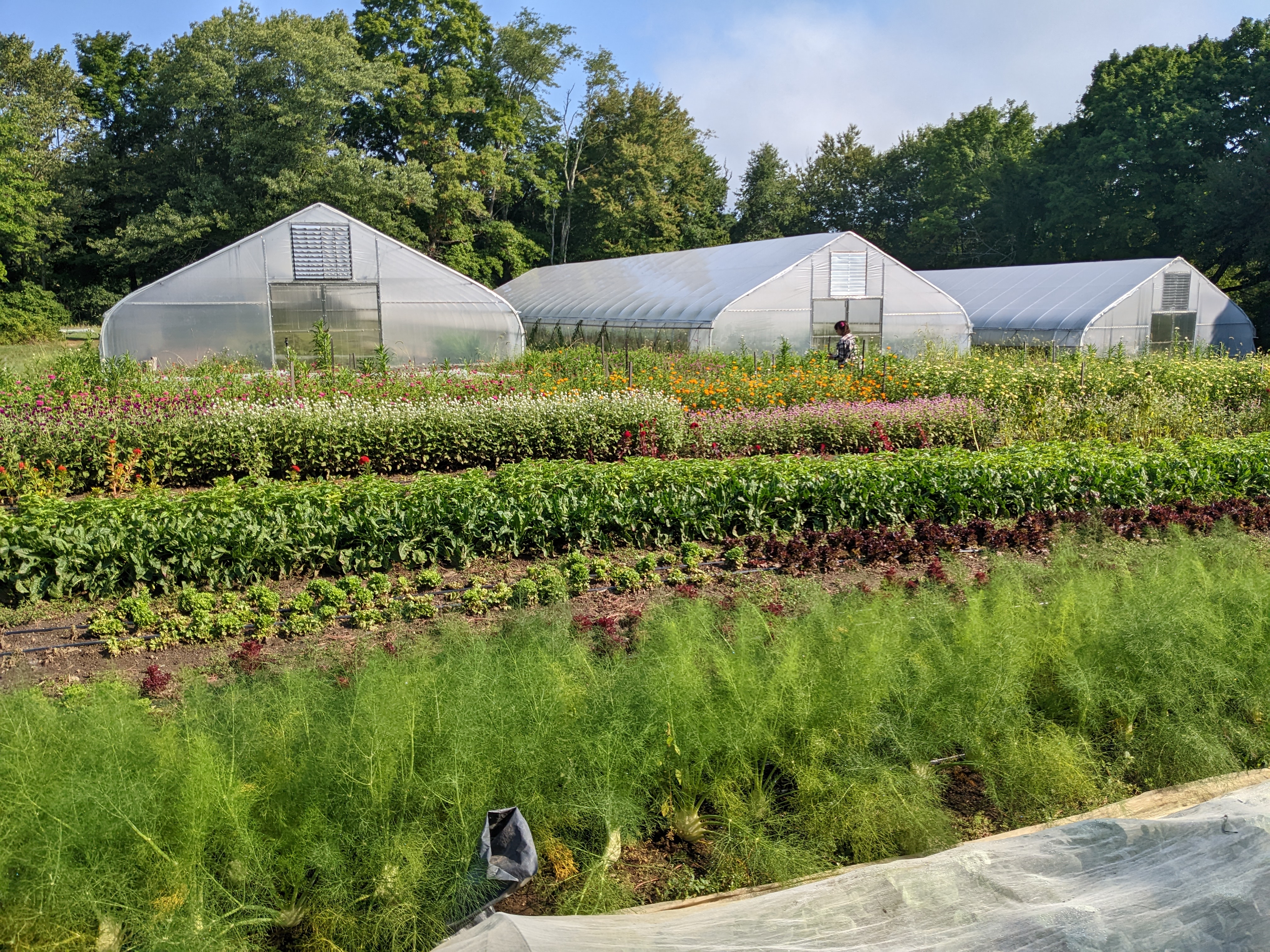
The Pro adds to the Plus package: 8' x 7' double sliding doors on each end (two 4' doors) that need no clearance arc, woven roll-up sides rated for 7 years of UV exposure, a steel and polycarbonate baseboard system, and a trellis cable support system for tomatoes, cucumbers, and other vining crops.
The woven sides are a separate material from the top cover. So not only do you save on plastic when the double-layer top is replaced, you also move the roll-up side work to a different day than covering. It's a small shift in labor and timing that makes a big difference.
Comparing tiers? See all three tiers and the sizes available on our high tunnel page.
Shop High Tunnel KitsHow to choose a tier for your site
Four questions usually point to the right tier:
- How cold are your shoulder seasons? If you plan to grow well into fall or start early in spring with cold-sensitive summer crops, the Plus and Pro add an inflated double-layer top and insulating twin-wall polycarbonate end walls, built for more season extension.
- How will you work in it every day? The Plus has hinged doors on each end that seal tight, and the Pro's sliding doors need no swing room for tight or windy farms. On the Grower, you choose the doors.
- How much upkeep do you want to plan for? Every tier needs some upkeep over the years. The Grower and Plus come with the hardware to attach the baseboard lumber you choose (we recommend 2x10s). The Pro includes a steel and polycarbonate baseboard system, a low-maintenance alternative to wood, and it's an add-on for the Grower and Plus.
- How does the cost fit your plan? NRCS pays a rate per square foot that's reviewed and set each fiscal year and varies by state, so ask your agent which rate applies to the structure you plan. The difference in kit cost between tiers is yours to plan for.
Most growers already know their answers to the first two; the last two are worth talking through with your agent and with us.
Frequently Asked Questions
What should I ask a seller to confirm a kit meets CPS 325?
Ask for the peak height, the frame material, and the cover's thickness and rated lifespan, then compare them with your state's version of the standard. Your agent confirms the final details.
Do I have to pay for the whole kit before NRCS pays?
Usually, yes. EQIP generally reimburses you after the practice is installed, so most growers cover the kit first. Historically underserved producers may be eligible for advance payments, so ask your local office whether that applies to you. We also have 0% financing partners we can connect you with.
Can I add Plus or Pro features to a Grower later?
Yes. The Grower's upgrade options include the inflated double-layer top, twin-wall polycarbonate end walls, doors, peak vents, bug exclusion netting, the trellis cable support system, a metal baseboard system, and woven roll-up sides. We also offer rack-and-pinion ridge vents that can be added to any tier.
What size high tunnel should I get for my NRCS contract?
Size it to the ground and crops you plan to grow, then check your state's limit. NRCS pays per square foot up to a cap that varies by state, and every tier comes in widths from 14 to 34 feet in any length in multiples of 4 feet, so you can size to your cap.
When are the FY2027 application ranking dates?
NRCS posts application ranking dates by state, and the FY2027 dates are listed on its application cutoff dates page now. Applications are accepted year-round, and one that misses a ranking date is generally considered in a future funding cycle. Your local office can confirm your state's next date.
The bottom line
Start with your state's FY2027 application ranking dates and our guide to finding your state's NRCS deadline. When you're ready to talk tiers and sizes, our NRCS high tunnels page is the place to start.
More on NRCS High Tunnels
Let's match a tier to your site
Tell us your climate, what you grow, and the size your contract allows, and we'll help you choose the tier that fits.
Shop High Tunnel Kits