How to Apply for the NRCS High Tunnel Grant: A 2026 Walkthrough
HOW TO APPLY FOR THE NRCS HIGH TUNNEL GRANT: A 2026 WALKTHROUGH
By Toby Fischer, Co-owner, CT Greenhouse · Updated July 2026
Applying for the NRCS high tunnel grant is free, and growers complete it every year without a consultant. The process runs through two USDA agencies, a handful of forms, and one signed contract, and each piece is manageable once you can see the whole sequence. This walkthrough covers every step, every form, and the deadlines that decide when your application gets funded.
Key Takeaways
- Two agencies share the process: the Farm Service Agency sets up your records first, then NRCS handles the conservation side.
- Applications are accepted year-round and cost nothing to file, but funding is awarded in batched ranking rounds.
- Wait for a signed contract before ordering your kit or breaking ground.
- Payment arrives as reimbursement after the final inspection, so plan your cash flow at the start, not the end.
1. How Do I Apply for the NRCS High Tunnel Grant?
To apply for the NRCS high tunnel grant, register with your local FSA office for a farm number, complete the eligibility paperwork with their staff, then submit your application to NRCS before your state's batching date. NRCS ranks applications, offers contracts to selected growers, and reimburses you after the tunnel is built and inspected.
That's the whole process. Here's each step in the order your agent will expect it to happen:
1 Establish your farm records with FSA: bring a photo ID and your deed or lease to the Farm Service Agency side of your USDA service center. They will set up your customer record and issue your farm and tract numbers.
2 Complete your eligibility paperwork: FSA staff will walk you through the certifications that establish you and the land qualify. If you are a beginning, veteran, limited resource, or socially disadvantaged farmer, say so at this visit, since additional certifications unlock better terms.
3 Meet your NRCS agent: tell the NRCS side of the office you want to apply for the high tunnel practice. Your agent will talk through your operation and usually schedule a site visit.
4 Develop your conservation plan: your agent writes the plan around Conservation Practice Standard 325, the seasonal high tunnel practice, based on your crops and resource concerns.
5 Submit your application before the batching date: your agent will prepare the program application with you. It holds your place for consideration in the current funding cycle and costs nothing to file.
6 Get ranked, then sign your contract: NRCS scores applications with its Conservation Assessment Ranking Tool (CART) and offers contracts down the ranked list. Sign first, and only then order your kit or start construction; purchases made before signing generally aren't reimbursable.
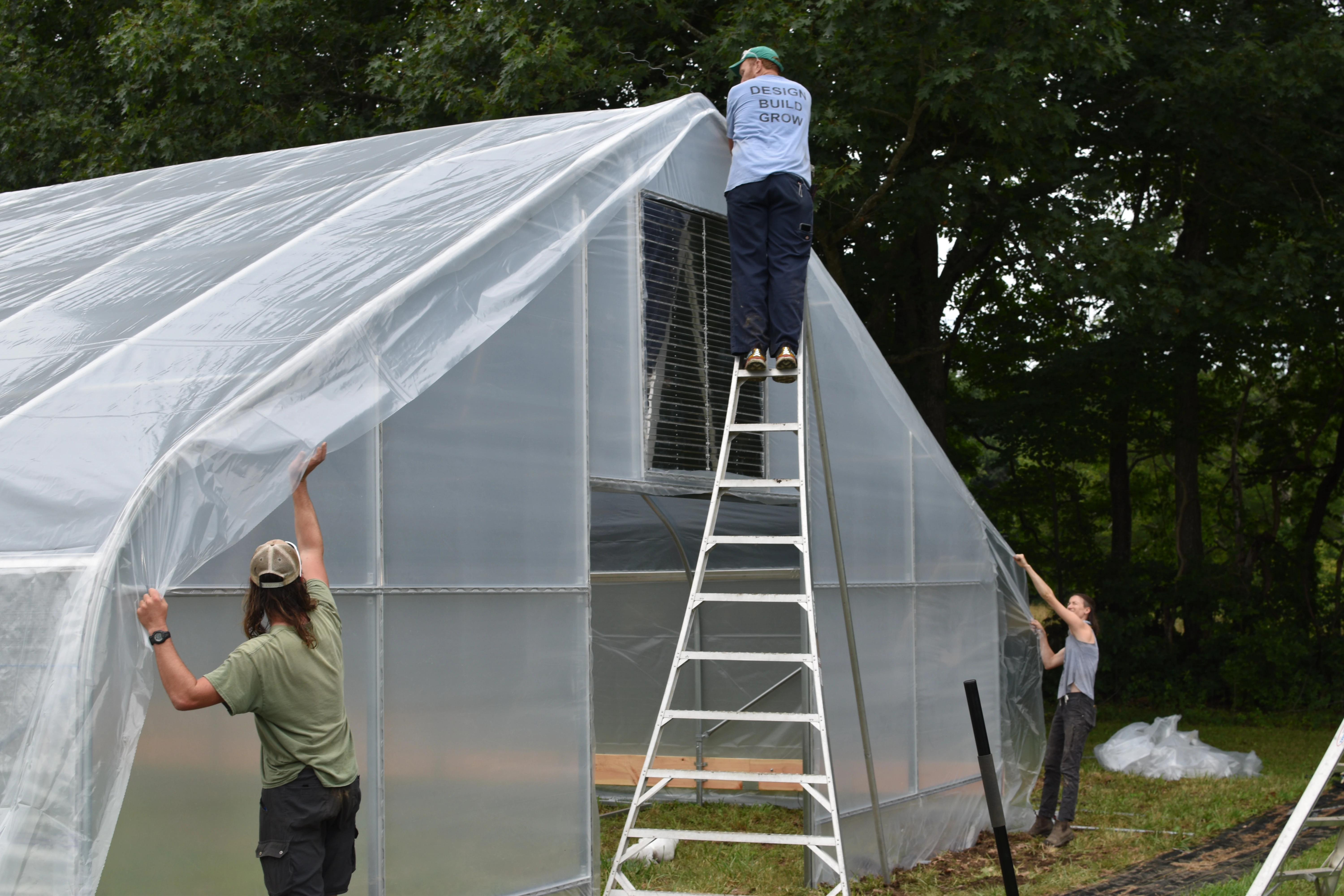
7 Build, pass inspection, get paid: construct the tunnel to your contract specs, request the final inspection, and NRCS releases your payment by direct deposit.
2. Before You Apply: Set Up Your USDA Records
The USDA splits the work between two agencies in the same building. FSA owns your identity as a farm: the farm number, the land records, and the eligibility certifications. NRCS owns the conservation side: the practice standard, the site visit, and the funding decision. Nothing moves on the NRCS side until the FSA side is complete, so the farm number is always the first stop.
You don't need to own the land. Leasing works fine as long as you can show control of the ground for the life of the practice, usually with a copy of your lease. If you're not sure the operation qualifies, our NRCS eligibility guide walks through who qualifies and how the historically underserved categories work.
3. What About the Paperwork?
You don't need to memorize form numbers to apply. FSA and NRCS staff prepare the paperwork with you at the service center: your customer record, the eligibility certifications, and the program application itself. The exact forms vary by state and change over time, so work with your local office to make sure everything is filed on time.
In plain English, the paperwork covers four things: who you are (your USDA customer record and farm number), whether the land qualifies (conservation compliance for wetlands and highly erodible ground), whether you qualify (income eligibility, plus historically underserved status if it applies), and what you're asking for (the program application your agent prepares with you). Direct deposit setup comes at the end so your reimbursement can be released.
Your service center staff fill out most of it with you, so none of this needs to be done from memory. Two pieces are worth understanding before you sit down. The income certification confirms your three-year average adjusted gross income is at or below $900,000, which the vast majority of family farms clear comfortably. And the direct deposit setup is easy to forget because it arrives at the end: payment can't be released without it, so ask your agent to put it in the packet early.
Good news: the historically underserved certification is the highest-leverage piece of the packet. Beginning farmers (generally under 10 years operating), veterans, and limited resource producers typically qualify for cost-share rates of up to 90% and can request at least half of their payment in advance.
4. When Is the NRCS High Tunnel Application Deadline?
NRCS accepts applications year-round, so there is never a wrong time to start your paperwork. Funding decisions happen in rounds: applications on file by a batching date get ranked together, and popular practices like high tunnels can use up a state's funds in the first round. Applying ahead of the first batching date of the fiscal year gives your application the most chances to be considered.
For fiscal year 2026, USDA set a single national batching deadline of January 15, 2026 for the first funding round, a shift from the purely state-by-state dates of earlier years. States still add their own later ranking rounds, and the next fiscal year's dates post each fall. Check the current application ranking dates for your state before you plan your timeline.
Deadlines and priorities do vary by state. If you grow in the Northeast or upper Midwest, our state guides for Connecticut, Massachusetts, and New York cover the local programs in more detail, with more states linked from our complete guide.
5. What Happens After You Submit?
Once your application is in, the process moves to NRCS. Your application is scored on local resource concerns and the conservation benefit of the practice, ranked against the other applications in the batch, and funded down the list until the money runs out. Selected growers sign a contract, build, and request the final inspection.

From your first FSA visit to reimbursement, the NRCS high tunnel process typically takes 12 to 18 months. Ranking usually happens in winter, contracts are signed in spring, construction runs through summer, and payment arrives after the final inspection. Your state's calendar may differ, so confirm dates with your local office.
The payment itself is a reimbursement at your contracted rate, not an upfront check, with one meaningful exception: historically underserved producers can request an advance of at least 50% of the contracted payment to buy materials before construction. Since the standard payment lands at the end of that timeline, it helps to know your options for covering the purchase before reimbursement arrives.
Planning your build? CT Greenhouse high tunnels are designed to meet CPS 325 requirements, from the entry-level Grower on up, with quotes sized to your contract. If you're choosing a model, our comparison of the Grower, Plus, and Pro tiers covers what each adds.
Frequently Asked Questions
How much will NRCS pay for a high tunnel?
Payment is set by your state's payment schedule, usually as a flat rate per square foot, and it changes each fiscal year. Your agent can quote the current rate for your state and practice scenario in one phone call, so ask before you size the structure.
Do I need to own the land to apply?
No. Leased ground qualifies as long as you can show control of the land for the practice lifespan, typically with a written lease. Bring the lease to your first FSA visit and they'll set up the farm record around it.
What happens if my application isn't funded this round?
It generally stays active and rolls into the next ranking cycle. Ask your agent how your application scored; a stronger conservation plan or an adjusted practice scenario often moves a resubmission up the list.
Is the high tunnel application different from a regular EQIP application?
No, it's the same EQIP process. A high tunnel is one practice within EQIP, Conservation Practice Standard 325, so you apply with the standard forms and your conservation plan simply centers on that practice.
Conclusion
Your next step is a visit to your local USDA service center to open your farm record; everything else builds from there. When you're ready to talk structures, our complete NRCS high tunnel guide covers the program end to end, and our team can size a kit to the contract you're applying for.
Related Articles
Applying This Season?
Browse high tunnel kits designed to meet CPS 325 requirements and get a written quote sized to your NRCS contract.