Greenhouse Covering Materials: Types, Lifespan, and How to Choose
Updated October 2026
The covering you pick does three jobs at once: it sets how much light reaches the crop, how much heat the house holds overnight, and how many seasons pass before you re-cover. Among greenhouse covering materials, the choice for most growers comes down to poly film or polycarbonate, with shade cloth as a summer layer over either. This guide compares the two, walks through the film options by growing goal, shows how we cover our own high tunnels at each tier, and explains how film attaches to the frame.
Key Takeaways
- Clear film passes most of the light. UV stabilized greenhouse film transmits 88 to 91 percent of the light plants use.
- A second layer holds heat. An inflated double layer cuts nighttime heat loss by about 40 percent.
- IR on the inner layer adds savings. An infrared inhibitor on the inside sheet is credited with about 15 percent energy savings in heated houses.
- Keep chemicals off the film. Pesticide residue, pressure-treated lumber, and bare PVC pipe can all shorten the life of greenhouse plastic. Paint PVC white or put a barrier between it and the film.
What are the main types of greenhouse covering materials?
The short answer
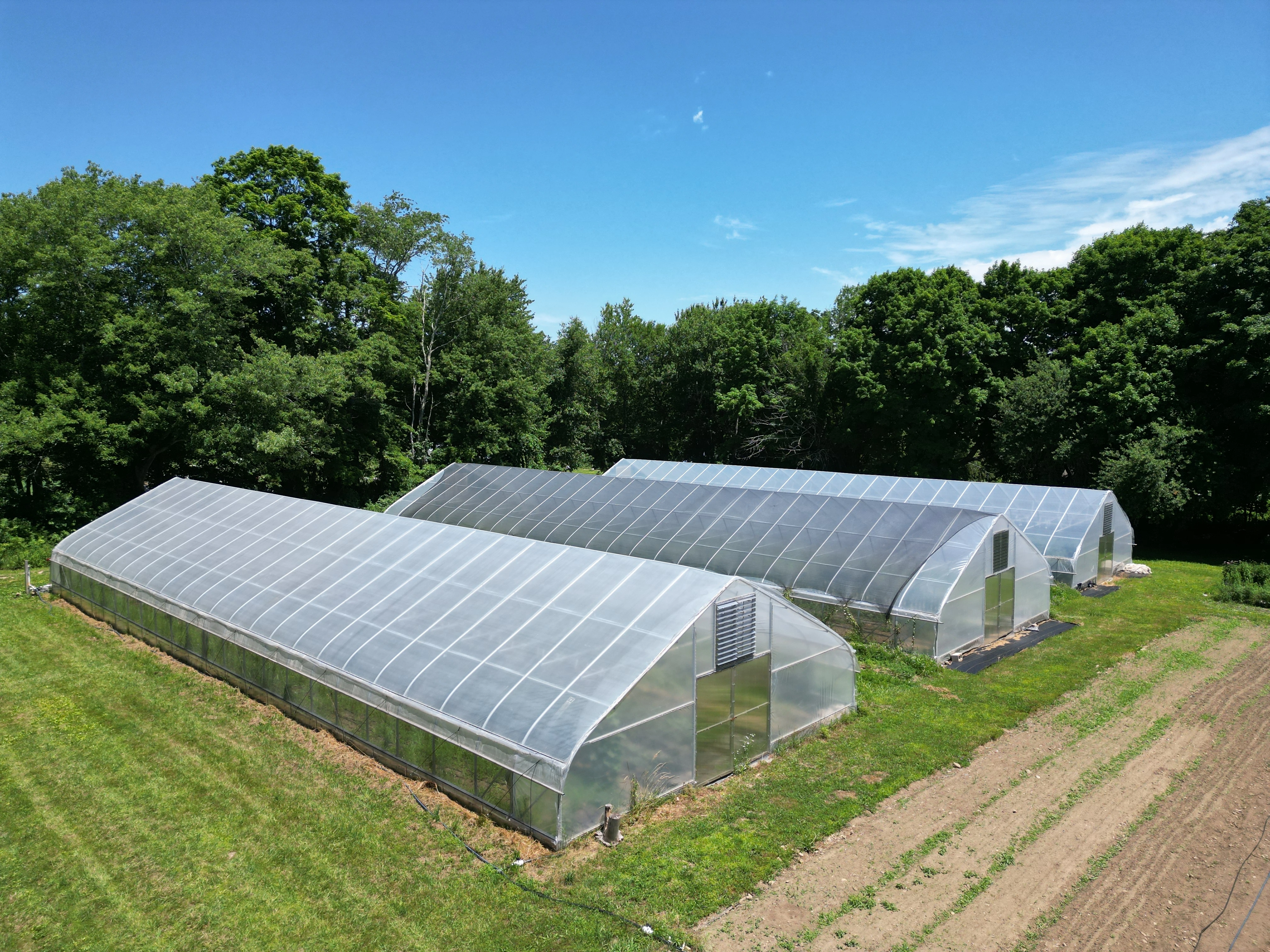
The main greenhouse covering materials are polyethylene film, rigid panels, and shade fabric. Poly film is the most common and comes in clear, infrared, diffusing, and woven versions. Rigid panels are twin-wall polycarbonate or glass. Shade cloth is a related material that goes over another covering to cut light and heat rather than enclosing the house.
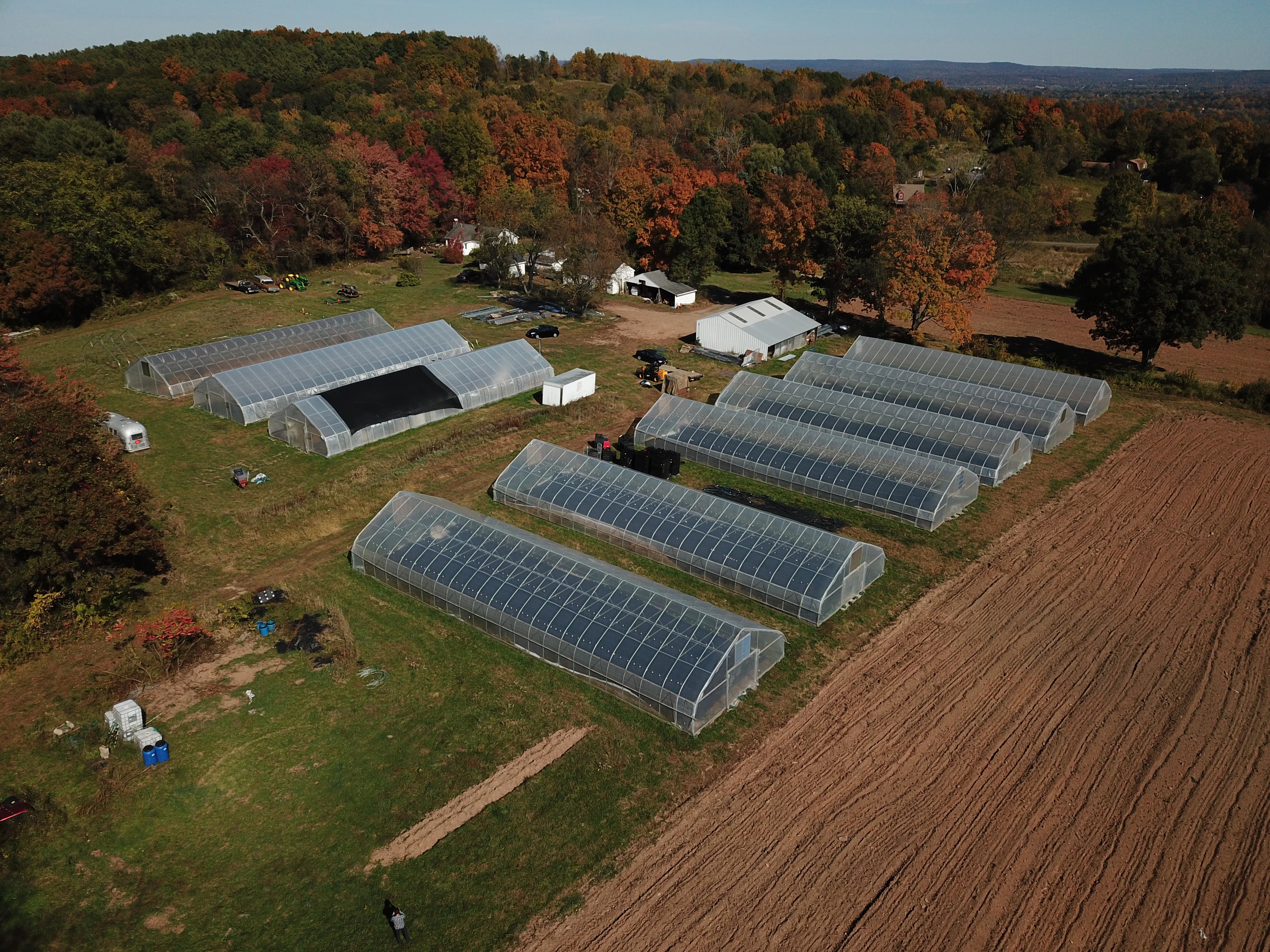
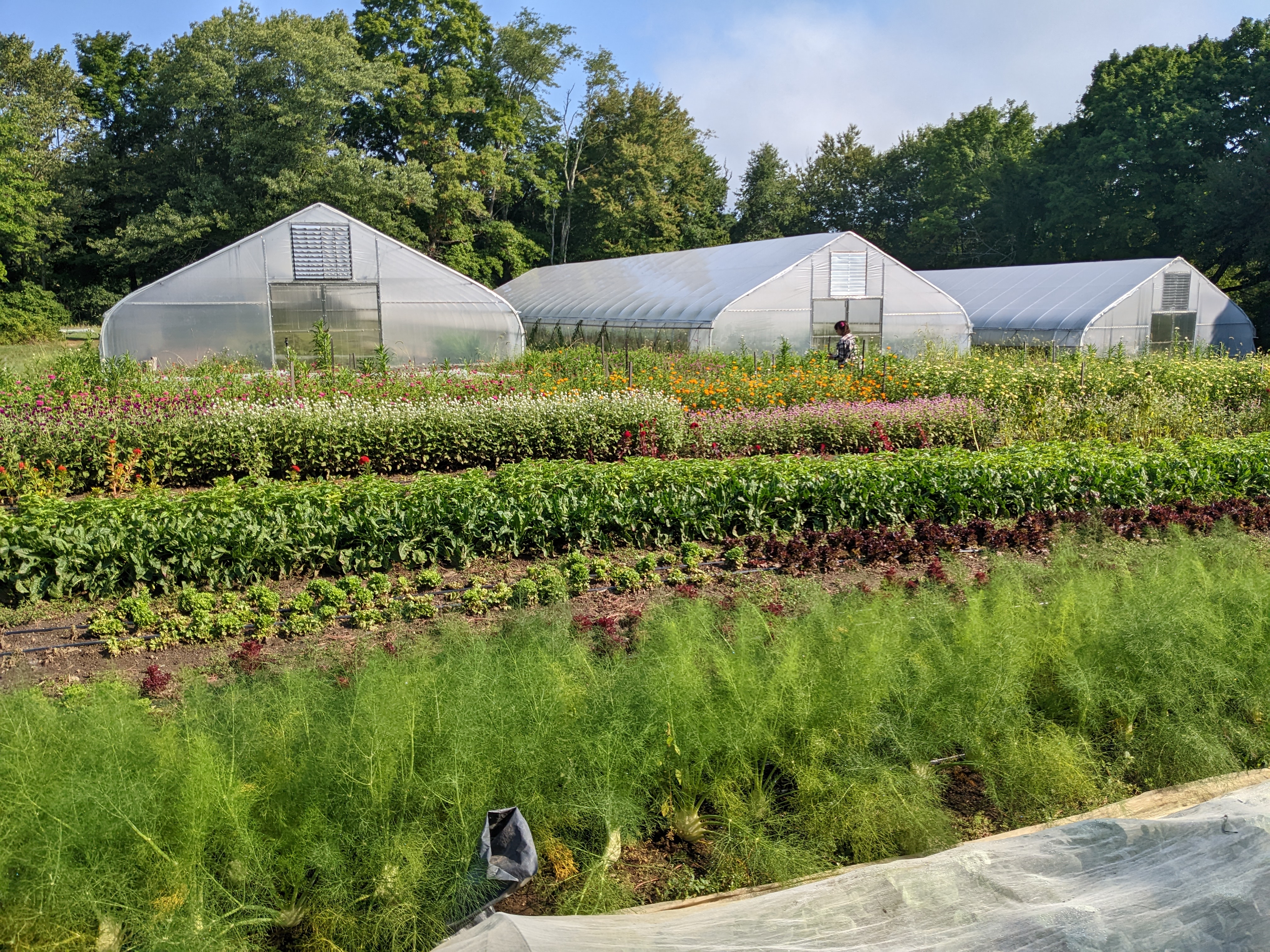
On most structures those materials share the job. Film covers the most square footage for the money, so it goes over the hoops, where most of the surface is. Rigid panels normally go on the end walls, doors, and upgraded baseboards. Shade cloth use varies by region. Specialty growers and growers in hotter areas may use it year round; cooler-climate growers often need it only for a short stretch of summer.
The table compares each covering on light, heat retention, durability, and where it usually goes:
| Covering | Light | Heat retention | Durability | Often used for |
|---|---|---|---|---|
| Clear poly film | High, direct | Low as a single layer, better as an inflated double | Replaced on a cycle | Roofs of most high tunnels |
| Infrared (IR) film | High, slightly below clear | Better than clear at night | Replaced on a cycle | Inner layer of a double cover, cold sites |
| Diffusing or white film | Scattered | Similar to clear | Replaced on a cycle | Hot sites, scorch-prone crops |
| Woven poly | Diffused | Low (single layer) | High tear and puncture resistance | Roll-up sides, windy sites |
| Twin-wall polycarbonate | Diffused | Higher (air channels) | Long, impact resistant | End walls, permanent houses |
| Glass | High, direct | Low (single pane) | Long, but heavy and breakable | Display and hobby houses |
What kind of plastic should I use to cover a greenhouse?
The short answer
Use a UV stabilized, greenhouse-grade polyethylene film. It's sold in 6 mil and warranted for four years or more, while cheaper one-year co-poly and construction sheeting aren't made for that kind of time in full sun. Start with clear film for the most light, then add infrared, diffusing, or woven material where your climate or crop calls for it.
Greenhouse plastic comes in two grades, and the grade matters more than anything else on the label. One-year co-poly is sold in 3, 4, and 6 mil and is meant for a single season. Greenhouse-grade film is sold only in 6 mil and carries a UV stabilizer that slows its breakdown in sunlight. UMass Extension's plastic greenhouse film update puts greenhouse grade at about double the price of co-poly with a warranty of four years or more, and it puts the light transmission of UV stabilized film at 88 to 91 percent.
That four-year film is what we put on our own tunnels. We stock Tufflite 6 mil 4 year greenhouse plastic as the standard high tunnel covering and Klerks K50 clear as well. We offer a number of other brands and options, so reach out to us with your specific needs.
What wears film out, and what shortens it
Sun and heat break down any polyethylene film over time, which is what the stabilizer slows. Early failures usually have a more specific cause: strain at the attachment points, rubbing on a rough surface or a sharp edge, plastic that was not pulled tight enough when it was installed, and heat building up where the film lies against purlins and extrusions.
Chemicals are the other common cause of an early re-cover. Pesticide residue and pressure-treated lumber can both affect the plastic, and so can PVC. University of Delaware Extension explains that PVC conduit gives off chlorine, which destroys the UV stabilizers in the film and can void its warranty. Where PVC has to touch the cover, paint it with plain white acrylic latex (not the mildew-resistant kind, which carries fungicide) or wrap it in non-PVC tape. Oil-based paints, wood preservatives, chlorine disinfectants, and sulfur or copper sprays belong on the same list.
Single layer or inflated double layer
A double poly cover is two sheets of film with a small blower keeping air between them, and that air gap does the insulating, not the plastic. An inflated double layer cuts nighttime heat loss by about 40 percent, and the inflation has a second benefit: it eases stress at the attachments and keeps the film from rippling on a windy day. A single layer costs less and has nothing to plug in.
The blower does need power at the structure. On our Plus high tunnel it comes pre-wired with an 8-foot cord for a 120V outlet, so plan the outlet before you choose a double layer. If you're adding a second layer to an existing house, we sell inflation blowers on their own.
Film options by growing goal
Beyond clear film, additives and construction change what a covering does. Each option below does one job: holding heat, controlling drips, spreading light, or resisting tears.
Infrared film
Infrared film carries an additive that keeps more of the heat radiating from soil and plants inside the house at night. The UMass greenhouse energy conservation checklist credits poly with an infrared inhibitor on the inner layer with about 15 percent savings. That figure comes from heated greenhouses, so in an unheated tunnel treat it as the direction of the benefit rather than a number to bank on. We carry Tufflite 6 mil 4 year infrared plastic and Klerks K50 infrared.
Anti-condensate
Anti-condensate is a surface treatment rather than a film type, and it often comes on the same sheet as IR. It's a wetting agent that lets condensation run down the film in a sheet instead of forming droplets. Droplets cut light and drip on the crop, so a film that sheds them means drier foliage and more light.
Diffusing and white film
Diffusing film scatters incoming light instead of letting it pass straight through, so more of it reaches the lower canopy and less of it lands as hot, direct beams on the upper foliage. White film goes further and cuts overall light and heat, which suits hot-region summers and crops that prefer some shade.
Woven poly
Woven poly is made from woven polyethylene strands, so it stands up to tearing and puncture better than standard film. The Solarside material we use for roll-up sides is more puncture resistant than 6 mil film, UV stabilized, rated for 7 years of UV exposure, and passes 87 percent of light while diffusing it evenly. It comes on the roll-up sides of our Pro and is available as an add-on for the Grower and Plus.
Because the sides are a separate piece from the roof film, they stay put when you re-cover the top. That separation helps on covering day too. Roll-ups account for roughly half of covering labor, so with separate side material you can put the roof on one day and the sides on another, and each job needs a shorter stretch of calm weather.
Is polycarbonate better than plastic film?
The short answer
It depends on how long the surface needs to last. Twin-wall polycarbonate costs more and needs more framing, but it holds heat better than a single layer of film, resists impact, and stays up for years without re-covering. That's why many high tunnels pair polycarbonate end walls, where a permanent surface frames the doors, with film over the hoops.
Twin-wall panels have hollow channels running through them, and the still air in those channels is what slows heat loss. An 8mm clear polycarbonate sheet is a common choice for end walls and it takes the occasional bump from a wheelbarrow better than film does.
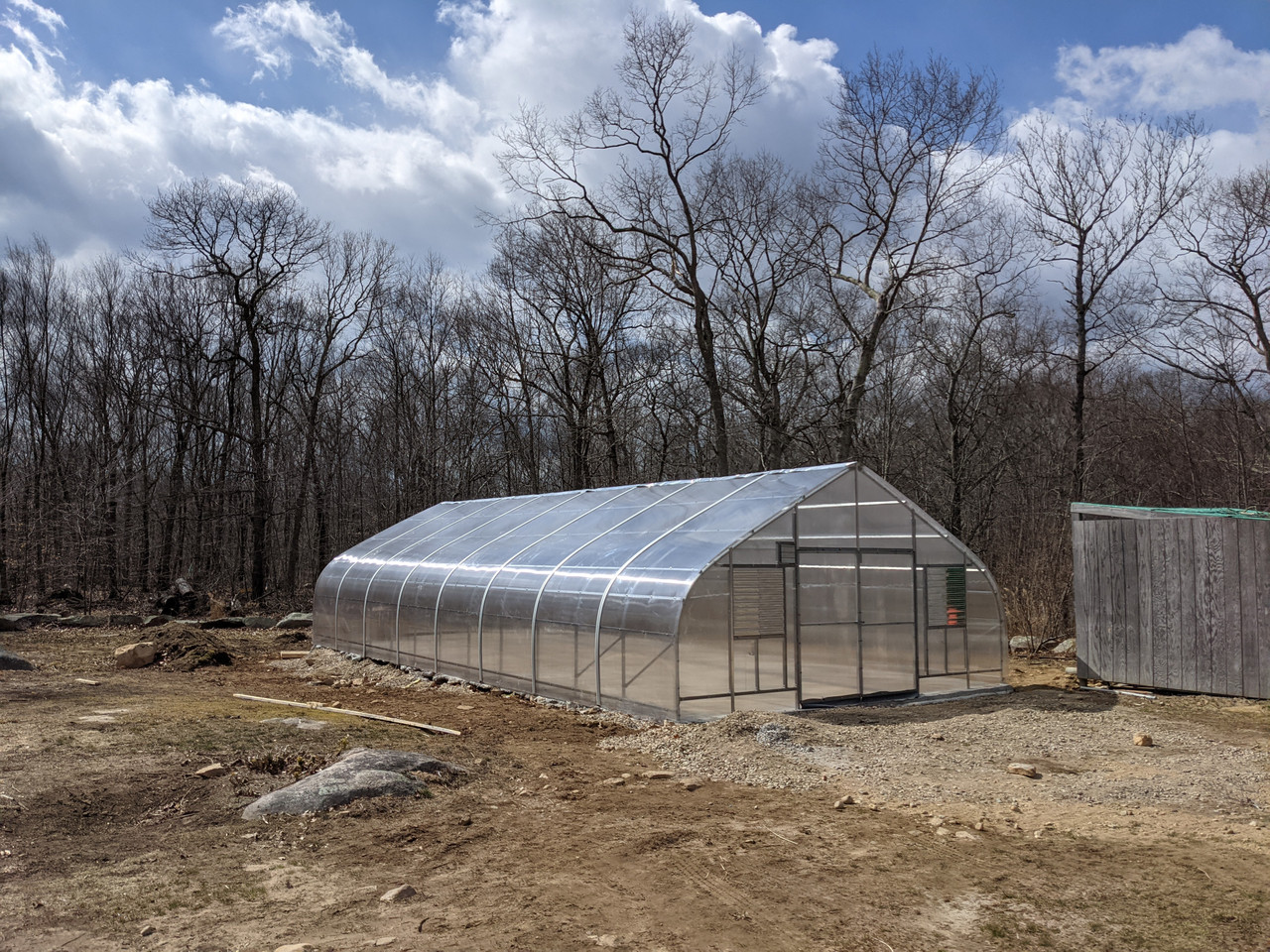
Glass is the traditional covering and is still common on display and hobby houses, and high end gutter connected ranges where its clarity is the point. It's heavy, needs a stronger and more precise frame than film or polycarbonate, and a single pane insulates poorly, so on working structures polycarbonate is the more common rigid choice.
How to choose the right covering
Four questions, taken in this order, usually narrow the field to one or two options:
- What is your budget, and how do you value your labor? For most growers the upfront investment in polycarbonate can be hard without a known return, and film is cheaper up front but costs a re-cover day every few years. The good news is that switching to polycarbonate later is relatively easy.
- What does your climate demand and what are you growing? Cold sites favor a double layer or IR film. Hot sites favor diffusing or white film, or shade cloth over clear. For high tunnels, knowing your crop plan ahead of time can drive this decision.
- How much light and heat does your crop want? A grower in Texas and one in Idaho with the same crop plan may have totally different needs.
- What does it cost over time? Film is cheaper today. Polycarbonate can be cheaper across many years because you aren't re-covering.
How we cover our own high tunnels
Our three high tunnel tiers show how those answers combine in practice:
- Grower: a single-layer greenhouse plastic top, with end walls in 6 mil 4 year film. An inflated double-layer top, twin-wall polycarbonate end walls, and woven roll-up sides are all available as add-ons.
- Plus: an inflated double layer of 6 mil film with an inflation blower, and twin-wall polycarbonate end walls.
- Pro: an inflated double layer of 6 mil 4 year film, 8mm twin-wall polycarbonate end walls, and woven roll-up sides.
The frame is shared across all three. The covering is one of the main places they differ, and it's the part you can add to later.
Building with NRCS funding?
CPS 325 has its own expectations for the cover, which our CPS 325 requirements guide lays out. Details vary by state, so confirm your covering with your local office before you order.
How the covering attaches: wiggle wire and base channels
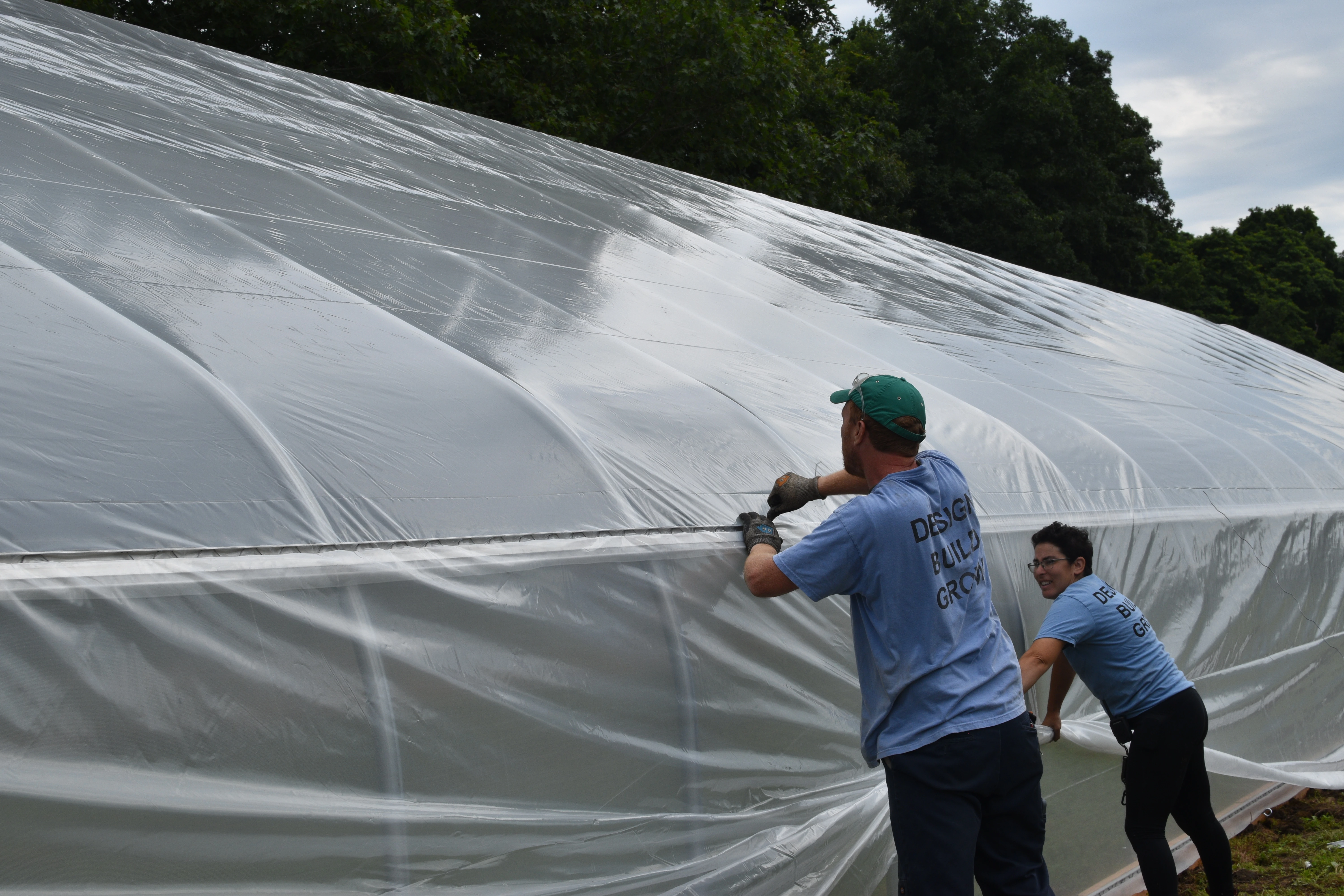
On a film-covered structure, the covering is secured to the end bows with an aluminum channel fastened to the frame and pieces of springy zigzag wire, or wiggle wire, "wiggled" into the channel over the film. Nothing goes through the plastic, and the wire comes back out when it's time to re-cover. For how the frame itself goes together, see Penn State Extension's high tunnel structure videos.
Along the length of the house, a double wirelock base with two separate channels side by side secures the plastic. Each channel can hold multiple coverings and pieces of wiggle wire, so the top covering, roll-up sides, and bug netting can be handled independently. This double wirelock acts as a structural permanent alternative to traditional wooden hip boards, and it's usually where the roof film and the roll-up sides meet.
Rigid panels fasten to the frame with their own trim and fasteners. On end walls and baseboards we use single H and double H extrusions. On the tops of houses we use a two-piece base and cap system with a drip-prevention spacer; it seals curved surfaces watertight without additional gaskets.
Pro tip
Pick a calm, mild day for covering. Film is far easier to handle without wind, and it seats into the channel more cleanly when it isn't cold and stiff.
Frequently Asked Questions
How do I know when greenhouse plastic needs replacing?
Excess discoloration, slower-growing crops, or brittle material all point toward replacement. Replace early rather than late to cut the chance of lost crops or an emergency re-cover.
How do I fix a small tear in greenhouse plastic?
Patch it while it's small. Clean and dry the film around the tear, then cover it with a poly repair tape such as our Poly Patch Tape. Tears can spread in wind, so a quick patch may carry the cover through to its planned replacement.
Can I use one-year co-poly on a high tunnel?
Yes, for a season you plan to tear down or a trial bed. For a structure you'll keep, choose greenhouse grade: co-poly is a one-season film, so you'd be re-covering every year, and the labor adds up faster than the savings.
Do I have to replace the roll-up sides when I re-cover the roof?
Not always, and it saves a lot of labor to keep them separate. Woven roll-up sides like the Solarside material on our Pro are separate from the top plastic, so re-covering the roof doesn't mean rebuilding the roll-ups. You can also cut off the top poly while leaving the roll-up sides on standard 6 mil houses, since in many cases the roll-up poly may last longer than the roof.
Next step
If you're weighing coverings for a specific structure, send us its size, your location, and your crop, and we'll suggest a covering and the hardware to hold it. Whichever film you choose, keep a roll of Poly Patch Tape on hand.
Related Articles
Not sure which covering fits your house?
Compare how the covering is packaged on our Grower, Plus, and Pro high tunnels.
Shop High Tunnel Kits