
-
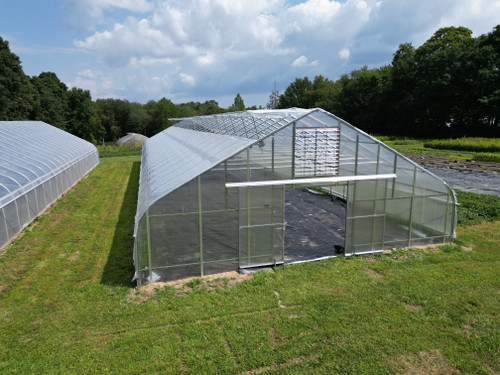
Rack and Pinion Ridge Vent Bundle
The Rack and Pinion Ridge Vent Bundle is a complete motorized greenhouse ridge vent package designed for greenhouses and high tunnels. It helps improve airflow, reduce heat buildup, and simplify greenhouse ventilation installation by providing the...
- Mouse
- Concrete
-

24' Ridge Vent Rail
24' Long Ridge Vent Rail. Contact us to order or for other lengths.
- Mouse
- Concrete
-

Clear vinyl flashing for ends of ridge vent (12' roll)
12' long roll of 8" wide clear vinyl flashing for ends of ridge vent (cut in half to seal both ends)
- Mouse
- Concrete
-
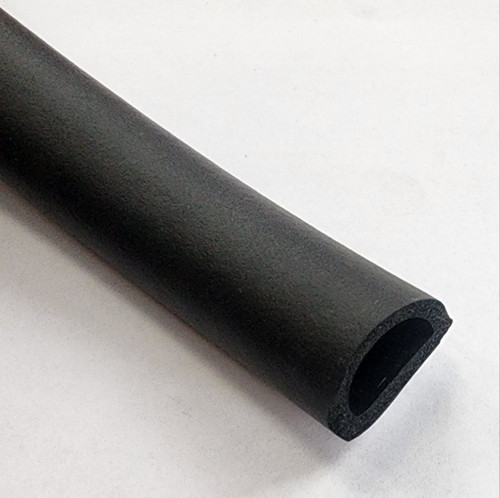
Black vent rail seal (per foot)
Trim-Lock 1/2" D-Shaped sponge rubber seal. Used to create a weather-tight seal on a rack and pinion ridge vent.
- Mouse
- Concrete
-

-

1/4" Flat washer (bag of 50)
1/4" flat washers. Pair with 1/4" x 3.25" hex bolt to connect ridge vent arms to racks.
- Mouse
- Concrete
-

1/4" Lock nut (bag of 30)
1/4" lock nut. Pair with 1/4" x 3.25" hex bolt to connect ridge vent arms to racks.
- Mouse
- Concrete
-

1/4" x 3.25" Grade 8 hex bolt (bag of 30)
1.4" x 3.25" grade 8 hex bolt to connect ridge vent arms to racks
- Mouse
- Concrete
-
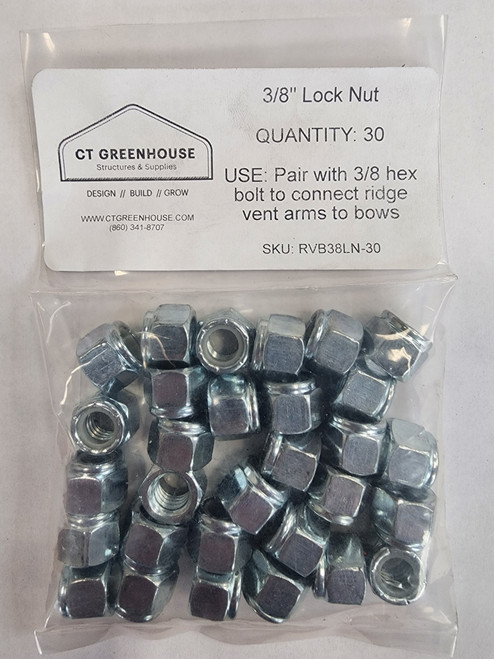
3/8" Lock nut (bag of 30)
3/8" x 4.5" lock nut. Pair with Hex bolt to connect ridge vent arms to 1.9" bows
- Mouse
- Concrete
-

3/8" x 4.5" Hex bolt (bag of 30)
3/8" x 4.5" Hex bolt to connect ridge vent arms to 1.9" bows
- Mouse
- Concrete
-

Wind brace for rack and pinion ridge vent (60")
60" Brace for the end bays of a rack and pinion ridge vent. Sized for 4' bow spacing. Contact us for other configurations.
- Mouse
- Concrete
-

-
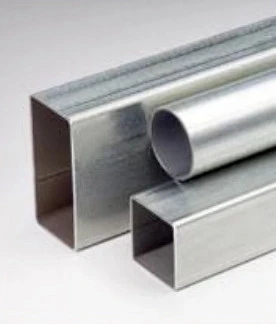
1.315" round 14 gauge galvanized steel tubing - 24' for ridge vent drive shaft
CALL US TODAY AT 860-341-8707 FOR MORE DETAILS AND AVAILABILITY OR TO PLACE AN ORDER. CUSTOM SIZES ALSO AVAILABLE. American-made galvanized steel tubing.
- Mouse
- Concrete
-

-

-

-

Low Voltage Ridge Vent Motor
The Low Voltage Ridge Vent Motor is a 24V DC rack and pinion vent motor designed for automated greenhouse ridge vent control. Manufactured by Advancing Alternatives, this low voltage ridge vent motor mounts centrally on your greenhouse ridge and drives...
- Mouse
- Concrete
-

Anemometer for AegisTEC Controller
Wind sensor for AegisTEC and AegisTEC Plus controllers. Crucial for ridge vent applications.
- Mouse
- Concrete
-

Rain Sensor for AegisTEC Controller
Rain Sensor for AegisTEC and AegisTEC Plus controllers. Useful for ridge vent applications.
- Mouse
- Concrete
-

Humidity Sensor for AegisTEC Controllers
Humidity sensor for AegisTEC and AegisTEC Plus controllers.
- Mouse
- Concrete
Rack and Pinion Ridge Vents
A rack and pinion ridge vent is one of the most effective greenhouse ventilation systems available, allowing excess heat and humidity to escape naturally through the roof peak. By improving airflow and climate control, ridge vents help create a healthier, more stable growing environment for crops.
The CT Greenhouse Rack and Pinion Ridge Vent Bundle includes the essential components needed for a complete motorized ridge vent system, including a low-voltage motor, drive pipe, vent rail, racks, pinions, vent arms, and hardware. Designed for both new greenhouse construction and retrofit projects, these systems are compatible with most poly-film greenhouses and high tunnels.
Available in multiple sizes with custom options upon request, CT Greenhouse ridge vents help growers reduce heat buildup, improve passive ventilation, lower humidity, and support more consistent growing conditions. Controller sold separately.
A rack and pinion ridge vent is a mechanical ventilation system that opens and closes a hinged vent along the peak of a greenhouse or high tunnel. A motor or hand crank rotates a steel drive shaft, which turns pinion gears that push toothed racks up and down, lifting the vent open or pulling it closed. It's the most reliable way to manage heat buildup at the ridge, where hot air naturally collects.
CT Greenhouse carries the full rack and pinion ridge vent system, from complete bundles with everything you need for a new installation, down to individual racks, pinions, seals, and hardware for repairs and custom builds.
How a Rack and Pinion Ridge Vent System Works
The system starts at the drive shaft, a 1.315" galvanized steel tube that runs the full length of the ridge. The shaft is supported by shaft hangers bolted to the purlins. At each bay, a pinion (gear) is clamped to the shaft, and it meshes with a rack (toothed bar) attached to the vent arm. When the shaft turns, every pinion engages at once, lifting the entire ridge vent evenly along its length. The vent opens into a 24' ridge vent rail with weather seals to keep rain and wind out when closed.
A single motor can drive the full ridge. No need for separate actuators at each bay. That's what makes rack and pinion the preferred greenhouse ventilation method for structures over 48 feet long.
Manual or Motorized: Choosing Your Setup
For smaller structures, a hand crank on the drive shaft is simple and effective. No wiring, no controller, just walk over and turn it. For high tunnels, commercial greenhouses, or anyone who doesn't want to babysit temperature swings, the low-voltage ridge vent motor automates the entire ridge. Pair it with an AegisTEC controller and optional sensors (anemometer, rain sensor, humidity sensor) and the system responds to weather conditions automatically.
Complete Bundles and Individual Parts
Building a new ridge vent or retrofitting an existing structure? Start with our complete rack and pinion bundle. It includes vent rails, racks, pinions, arms, drive shaft, hardware, and seals sized to your ridge length. Replacing a worn rack, upgrading to motor automation, or sourcing hardware for a custom build? Browse the full parts selection below.
Rack and Pinion Ridge Vent FAQs
Polaris theme designed by epicShops